

Finding the right path to recovery can feel overwhelming, especially when you’re unsure where to begin or what to expect. If you or someone you love is struggling with substance abuse in the San Fernando Valley, understanding how comprehensive addiction treatment works, from the first day of detox through long-term recovery support, can help you make informed decisions and feel confident about taking that crucial first step toward healing.
At Restore Health & Wellness Center, we guide individuals through every phase of this transformative process with compassion, clinical expertise, and individualized care designed to address not just the symptoms of addiction, but its root causes.

Understanding the Continuum of Care
Quality San Fernando Valley rehab centers provide a continuum of care, a coordinated series of treatment services that adapt to your changing needs as you progress through recovery. This integrated approach ensures you receive the right level of support at the right time, creating a strong foundation for lasting sobriety.
The continuum typically includes medical detoxification, residential treatment, partial hospitalization programs (PHP), intensive outpatient programs (IOP), and ongoing aftercare support. Each phase builds upon the previous one, creating seamless transitions that reduce relapse risk and promote sustained recovery.
Phase One: Medical Detoxification
Your recovery journey begins with medical detoxification, the process of safely removing substances from your body under professional supervision. According to research, depending on the substance involved and the severity of dependence, withdrawal can range from uncomfortable to medically serious without proper care.
At our San Fernando Valley drug rehab center, we provide 24/7 medical monitoring during detox, ensuring your safety and comfort throughout this critical first phase. Detox typically lasts 5-10 days, though duration varies based on individual factors including substance type, usage patterns, and overall health.
Phase Two: Residential Treatment
Following detox, residential treatment provides an immersive healing environment where you can focus entirely on recovery without the distractions, triggers, and stressors of everyday life. At our San Fernando Valley rehab treatment center, residential programming combines evidence-based therapies with holistic modalities to address the whole person, mind, body, and spirit.
Evidence-Based Therapies
Our residential program incorporates proven therapeutic approaches including:
- Individual addiction counseling to explore underlying issues, process emotions, and develop personalized coping strategies
- Group therapy to build meaningful connections and learn from shared experiences in a safe, non-judgmental setting
- 12-Step programs and SMART Recovery for peer support and accountability
- Moral Reconation Therapy (MRT) to strengthen decision-making and personal responsibility
- Dual diagnosis treatment for co-occurring mental health disorders, addressing both conditions simultaneously for optimal outcomes
Holistic Healing Modalities
We believe true healing extends beyond traditional therapy. Our residential program complements evidence-based treatments with alternative approaches that promote overall wellness and help you reconnect with yourself:
- Yoga therapy and meditation for stress management and mindfulness; research shows meditation benefits recovery
- Art therapy for emotional expression and processing difficult feelings
- Exercise therapy to rebuild physical health and release natural endorphins
- Nutritional therapy to restore body balance and support healing
- Chiropractic care and pain management to address physical discomfort without substances
Residential treatment typically lasts 30-90 days, with individualized treatment plans determining the optimal duration for each client based on their progress and specific needs.
Phase Three: Partial Hospitalization Program (PHP)
As you progress in recovery and gain confidence in your coping skills, our Partial Hospitalization Program offers a step-down level of care that maintains structure while gradually reintroducing independence. PHP clients participate in intensive therapeutic programming during the day, typically five to six hours, five days weekly, while residing in sober living or at home.
Phase Four: Intensive Outpatient Program (IOP)
The Intensive Outpatient Program provides continued support as you resume work, education, or family responsibilities. IOP typically involves 9-12 hours of programming weekly, scheduled during evenings or weekends to accommodate your commitments and daily life.
Intensive outpatient treatment sessions focus on:
- Strengthening coping mechanisms for real-world stressors
- Navigating daily challenges and triggers with confidence
- Building healthy relationships and communication skills
- Developing personalized relapse prevention strategies
- Creating sustainable structure and accountability in your life
This flexibility allows you to practice independent living while maintaining access to professional guidance and the peer support that has become instrumental in your recovery journey.
Phase Five: Outpatient Treatment and Aftercare
Long-term recovery requires ongoing support beyond formal treatment programs. Our outpatient services and alumni program provide continued resources as you navigate your new life in recovery, ensuring you never feel alone in this journey.
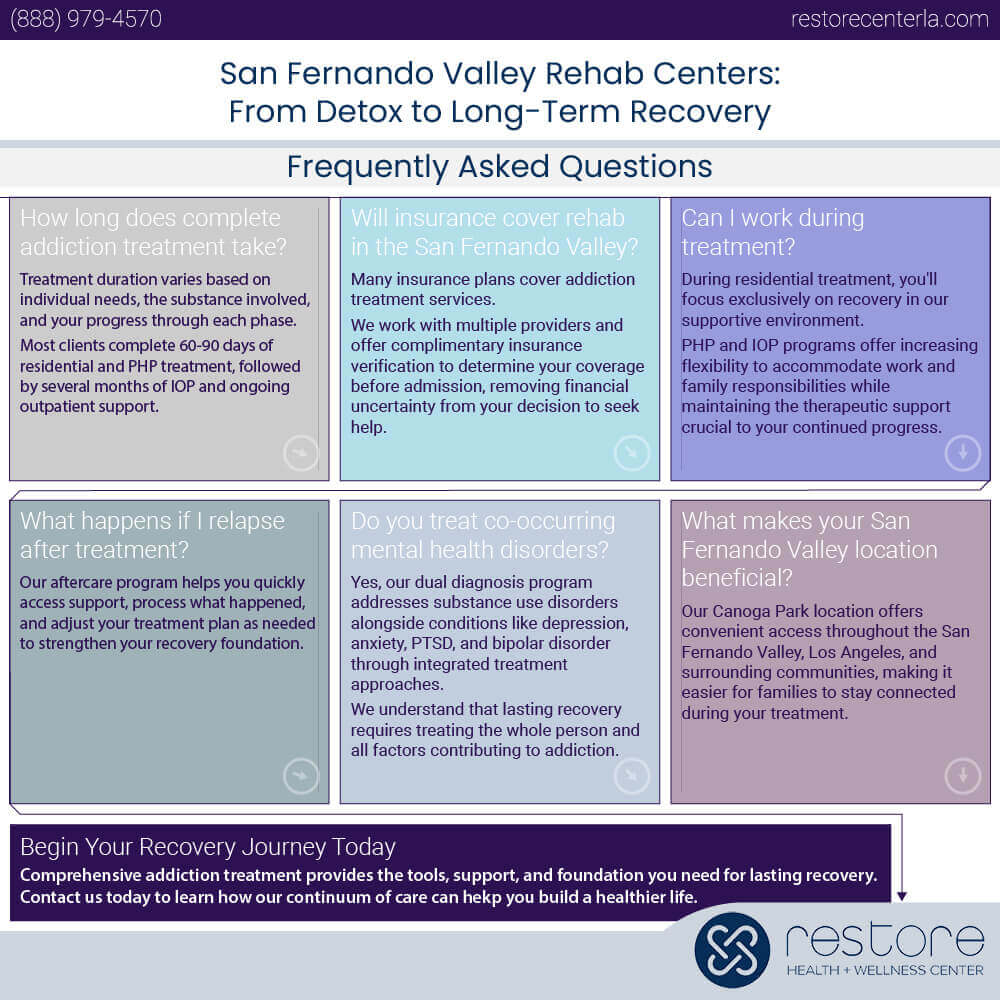
Frequently Asked Questions
How long does complete addiction treatment take?
Treatment duration varies based on individual needs, the substance involved, and your progress through each phase. Most clients complete 60-90 days of residential and PHP treatment, followed by several months of IOP and ongoing outpatient support.
Will insurance cover rehab in the San Fernando Valley?
Many insurance plans cover addiction treatment services. We work with multiple providers and offer complimentary insurance verification to determine your coverage before admission, removing financial uncertainty from your decision to seek help.
Can I work during treatment?
During residential treatment, you’ll focus exclusively on recovery in our supportive environment. PHP and IOP programs offer increasing flexibility to accommodate work and family responsibilities while maintaining the therapeutic support crucial to your continued progress.
What happens if I relapse after treatment?
Our aftercare program helps you quickly access support, process what happened, and adjust your treatment plan as needed to strengthen your recovery foundation.
Do you treat co-occurring mental health disorders?
Yes, our dual diagnosis program addresses substance use disorders alongside conditions like depression, anxiety, PTSD, and bipolar disorder through integrated treatment approaches. We understand that lasting recovery requires treating the whole person and all factors contributing to addiction.
What makes your San Fernando Valley location beneficial?
Our Canoga Park location offers convenient access throughout the San Fernando Valley, Los Angeles, and surrounding communities, making it easier for families to stay connected during your treatment.
Begin Your Recovery Journey Today
Comprehensive addiction treatment provides the tools, support, and foundation you need for lasting recovery. From medically supervised detox through long-term aftercare, our San Fernando Valley rehab treatment center walks beside you every step of the way with compassion, clinical expertise, and individualized care that honors your unique path to wellness.
Contact Restore Health & Wellness Center today to learn more about how our continuum of care can help you or your loved one build a healthier, more fulfilling substance-free future.