

Choosing to seek help for substance abuse is one of the most courageous decisions you can make. If you’re searching for a drug rehab center in Encino, understanding how treatment supports long-term recovery can help you feel more confident about taking that first step. Quality addiction treatment is a comprehensive process that addresses the physical, emotional, and psychological aspects of addiction while building a foundation for lasting wellness.
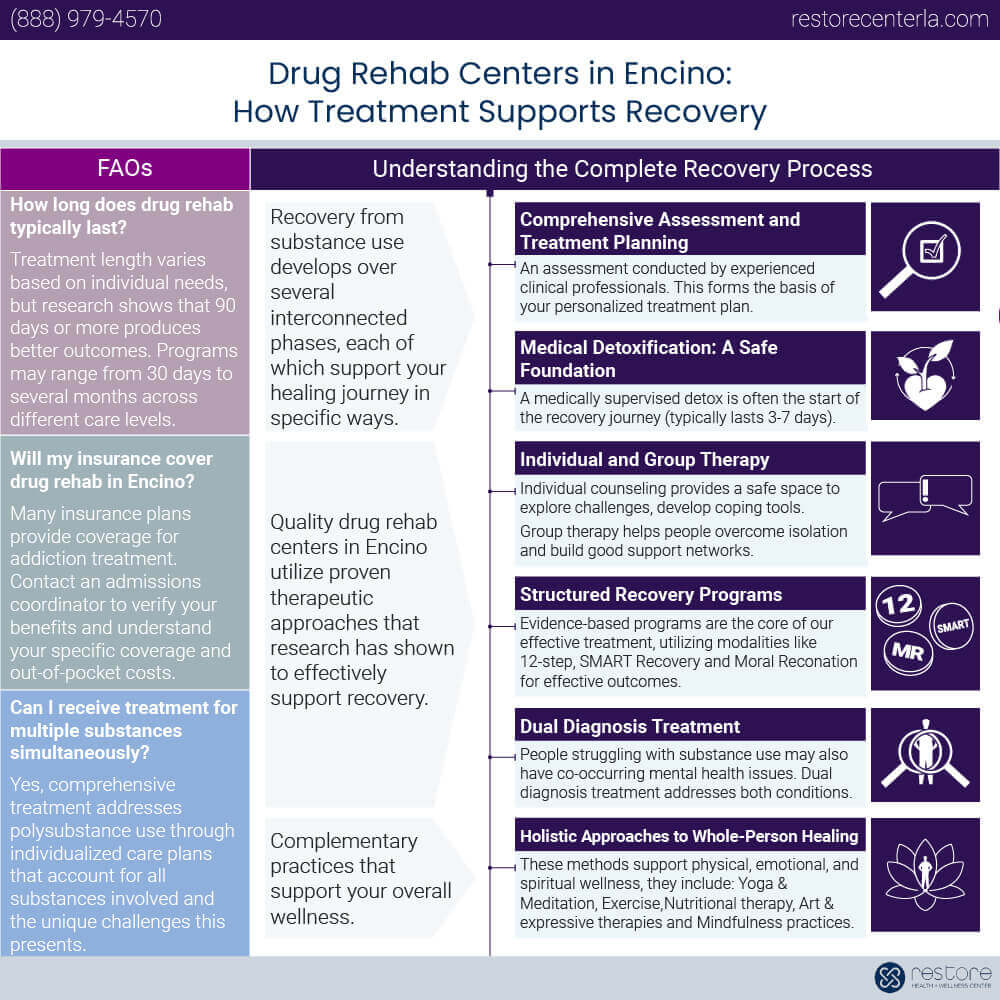
Understanding the Complete Recovery Process
Recovery from substance use unfolds through several interconnected phases, each designed to support your healing journey in specific ways.
Comprehensive Assessment and Treatment Planning
Your recovery begins with a thorough assessment conducted by experienced clinical professionals. This evaluation examines your substance use history, mental health status, physical health, family background, and personal recovery goals. At an Encino rehab center, this information forms the basis of your individualized treatment plan.
Personalized planning ensures that treatment addresses not just the symptoms of addiction but also the root causes that contribute to substance use, including trauma, co-occurring mental health conditions, and environmental triggers.
Medical Detoxification: A Safe Foundation
For many individuals, recovery starts with medically supervised detox. During this phase, compassionate clinical staff monitor your withdrawal symptoms around the clock, providing medications and supportive care to ensure your safety and comfort. Medical detox typically lasts 3-7 days, depending on the substance involved and individual factors.
Evidence-Based Treatment Modalities
Quality drug rehab centers in Encino utilize proven therapeutic approaches that research has shown to effectively support recovery.
Individual and Group Therapy
Individual counseling provides a confidential space to explore personal challenges, develop coping strategies, and work through underlying issues contributing to addiction. Therapeutic approaches may include Cognitive Behavioral Therapy (CBT), Dialectical Behavior Therapy (DBT), and trauma-informed care.
Group therapy connects you with others facing similar challenges, reducing isolation while building peer support networks that continue beyond formal treatment.
Structured Recovery Programs
Evidence-based programs form the backbone of effective treatment:
- 12-Step facilitation connects you with community support through Alcoholics Anonymous or Narcotics Anonymous principles
- SMART Recovery offers science-based self-empowerment and self-reliance techniques
- Moral Reconation Therapy (MRT) focuses on decision-making skills and personal growth to prevent relapse
Dual Diagnosis Treatment
Many individuals struggling with substance use also experience co-occurring mental health conditions like depression, anxiety, PTSD, or bipolar disorder. Dual diagnosis treatment addresses both conditions simultaneously, recognizing that lasting recovery requires treating the whole person rather than isolated symptoms.
Holistic Approaches to Whole-Person Healing
Comprehensive recovery extends beyond traditional talk therapy to include complementary practices that support physical, emotional, and spiritual wellness:
- Yoga and meditation reduce stress while improving mind-body connection and self-awareness
- Nutritional therapy helps repair physical damage and supports overall health
- Exercise therapy releases natural endorphins and establishes healthy routines
- Art and expressive therapies provide creative outlets for processing emotions
- Mindfulness practices cultivate presence and emotional regulation
At Restore Health & Wellness Center, we believe true recovery encompasses every aspect of your being.
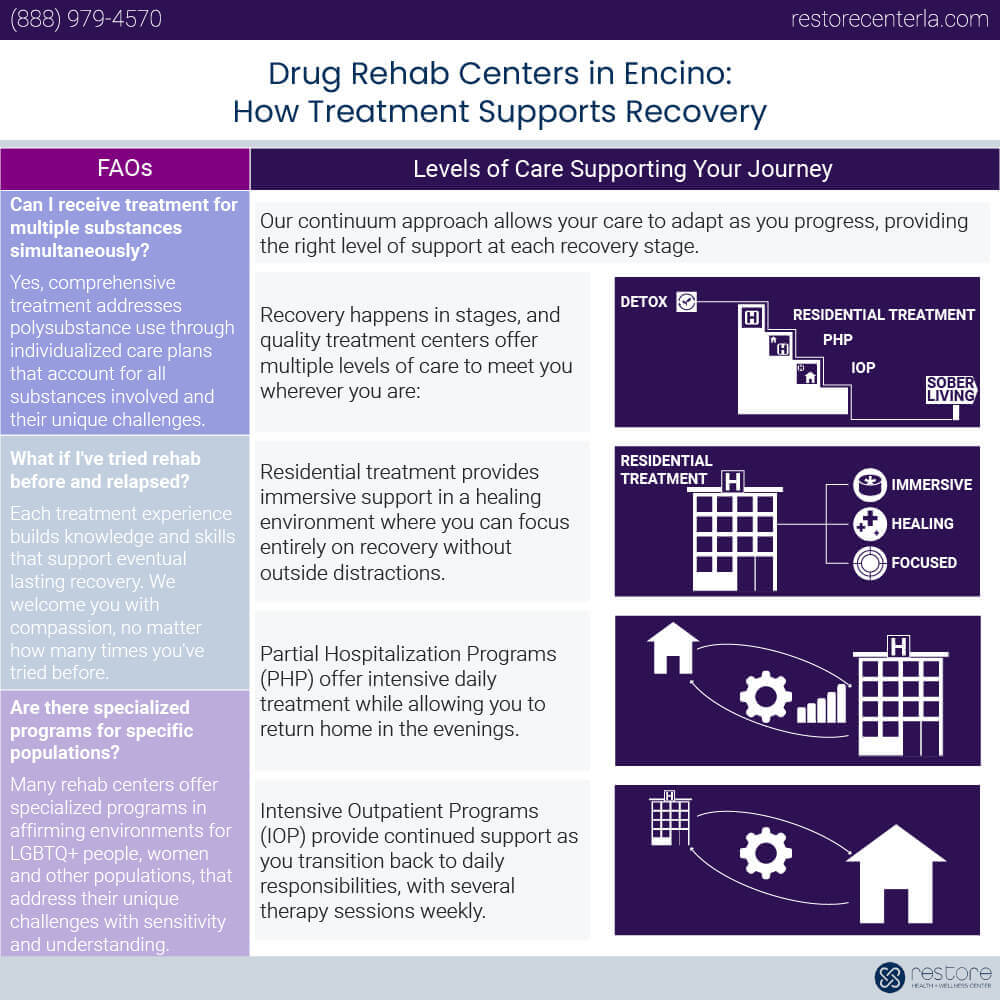
Levels of Care Supporting Your Journey
- Recovery happens in stages, and quality treatment centers offer multiple levels of care to meet you wherever you are:
- Residential treatment provides immersive support in a healing environment where you can focus entirely on recovery without outside distractions.
- Partial Hospitalization Programs (PHP) offer intensive daily treatment while allowing you to return home in the evenings.
- Intensive Outpatient Programs (IOP) provide continued support as you transition back to daily responsibilities, with several therapy sessions weekly.
This continuum approach allows your care to adapt as you progress, providing the right level of support at each recovery stage.
Frequently Asked Questions
How long does drug rehab typically last?
Treatment length varies based on individual needs, but research shows that 90 days or more produces better outcomes. Programs may range from 30 days to several months across different care levels.
Will my insurance cover drug rehab in Encino?
Many insurance plans provide coverage for addiction treatment. Contact an admissions coordinator to verify your benefits and understand your specific coverage and out-of-pocket costs.
Can I receive treatment for multiple substances simultaneously?
Yes, comprehensive treatment addresses polysubstance use through individualized care plans that account for all substances involved and the unique challenges this presents.
What if I’ve tried rehab before and relapsed?
Each treatment experience builds knowledge and skills that support eventual lasting recovery. We welcome you with compassion, no matter how many times you’ve tried before.
Are there specialized programs for specific populations?
Many Encino rehab centers offer specialized programs for women, LGBTQ+ individuals, and other populations, providing affirming environments that address unique challenges with sensitivity and understanding.
Begin Your Recovery Journey Today
Finding the right drug rehab center in Encino means choosing a facility that offers comprehensive, personalized care addressing your unique needs. At Restore Health & Wellness Center, we combine medical expertise, evidence-based therapies, holistic approaches, and compassionate support to guide you toward lasting recovery.
Recovery is possible, and you don’t have to face this journey alone. Contact us today to speak with a caring admissions coordinator who can answer your questions and help you take the first step toward healing.