

When addiction has disrupted every aspect of daily life, the idea of “structure” might feel overwhelming or even unwelcome. Yet for many individuals beginning their recovery journey, a structured residential environment offers something valuable: the opportunity to step away from chaos and rebuild daily life around consistency, support, and intentional routines.
Residential treatment Los Angeles programs provide more than just a place to stay during recovery. They create environments where structure itself becomes a therapeutic tool, helping individuals focus on treatment and develop the habits, coping skills, and routines that support recovery.
What Does Structure Mean in Residential Treatment?
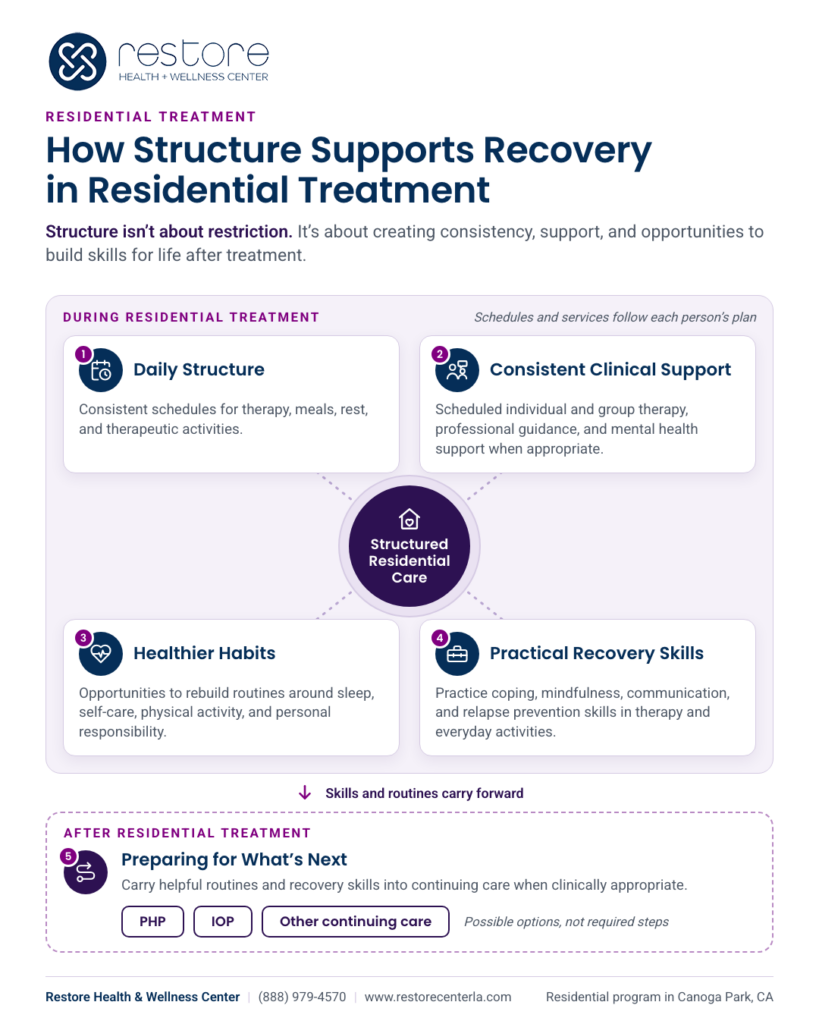
Structure in drug rehab in Los Angeles settings refers to the predictable framework of each day: scheduled therapy sessions, mealtimes, group activities, rest periods, and therapeutic practices. Research describes residential treatment as care provided 24 hours a day, generally in non-hospital settings. This isn’t about rigidity or control; it’s about creating a supportive setting where healing can take place.
In residential treatment, structure typically includes:
- Consistent wake and sleep schedules
- Scheduled individual and group therapy sessions
- Designated times for holistic practices like yoga, meditation, or art therapy
- Structured mealtimes with nutritious meals
- Quiet time for reflection and personal work
- Planned recreational and social activities that build community
How Structure Supports Early Recovery
Creating Distance from Triggering Environments
One of the key features of residential treatment is the physical separation it provides from environments associated with substance use. Structure reinforces this separation by filling each day with purposeful activities and reducing the idle time that can make focusing on treatment harder.
At Restore Health & Wellness Center, our residential addiction treatment in Canoga Park program helps clients step away from the people, places, and situations that may have contributed to their substance use, replacing them with a compassionate, recovery-focused community.
Rebuilding Healthy Routines
Substance use often disrupts healthy daily patterns. Sleep schedules become erratic, nutrition suffers, and self-care disappears. The structured environment of addiction treatment in Los Angeles helps individuals rediscover what it feels like to care for themselves consistently.
Through regular schedules, clients begin to:
- Reestablish regular sleep-wake cycles
- Practice consistent self-care habits
- Engage in regular physical activity
- Develop time management skills
These routines can become building blocks of a healthier lifestyle after treatment.
Providing Consistent Clinical Support
Structure helps make professional support predictable and accessible. Knowing that therapy sessions, medical check-ins, and group meetings occur at scheduled times creates a framework of accountability while providing the reassurance of consistent care.
This consistency allows clients to:
- Build trust with treatment providers through regular contact
- Process difficult emotions with professional guidance
- Practice new coping strategies in a supported environment
- Receive medication management and medical monitoring as needed
- Address underlying trauma and mental health concerns
Our dual diagnosis treatment approach integrates mental health support throughout the structured daily schedule, so co-occurring conditions can be addressed alongside substance use.
Structure as Preparation for Life After Treatment
Practicing Coping Strategies in Real-Time
A structured residential environment offers the opportunity to practice recovery skills multiple times each day. Whether it’s managing cravings during group therapy, using mindfulness techniques, or applying conflict-resolution skills in community settings, structure creates natural opportunities for skill-building.
Clients engage in therapies including:
- 12-Step Programs and SMART Recovery
- Moral Reconation Therapy for decision-making skills
- Individual addiction counseling tailored to personal needs
- Group therapy for peer support and accountability
Building Confidence Through Small Successes
Following a structured schedule and meeting daily expectations can build self-efficacy. Each therapy session attended and each healthy choice made becomes evidence of capability, helping counter the shame and self-doubt that often accompany substance use challenges.
Transitioning to the Next Level of Care
The structure learned in drug rehab Los Angeles residential programs doesn’t end when clients step down to partial hospitalization or intensive outpatient treatment in Canoga Park. Instead, clients carry these skills forward, gradually applying them to less structured environments while maintaining therapeutic support. Structure evolves rather than disappears, adapting to each person’s needs.
Frequently Asked Questions
How long does residential treatment typically last?
Length varies based on individual needs and progress. Our treatment team works with each client to determine an appropriate length of stay based on clinical assessment and personal recovery goals.
What happens during a typical day in residential treatment?
Days include individual therapy, group sessions, holistic therapies like yoga or art therapy, meals, recreational time, and personal reflection periods, all within a structured but comfortable schedule.
What if I’ve tried residential treatment before?
Previous treatment experiences can inform your new plan. Your team will look at what worked previously and explore approaches that may better fit your needs.
Find Structure and Support at Restore
Structure isn’t about restriction; it’s about creating supportive conditions where healing can happen. If you or a loved one is considering residential treatment Los Angeles options, contact Restore Health & Wellness Center today at (888) 979-4570 to learn more about our residential program in Canoga Park.