

When you or someone you love is ready to address substance use, medical detox is often the first step. But detox is exactly that: a beginning, not a complete treatment. Understanding how to use this phase to prepare for continuing care can help you move into the next stage of recovery with a clear plan.
If you’re exploring options at a detox center Encino individuals and families can access, knowing what happens after withdrawal management is just as important as understanding detox itself.
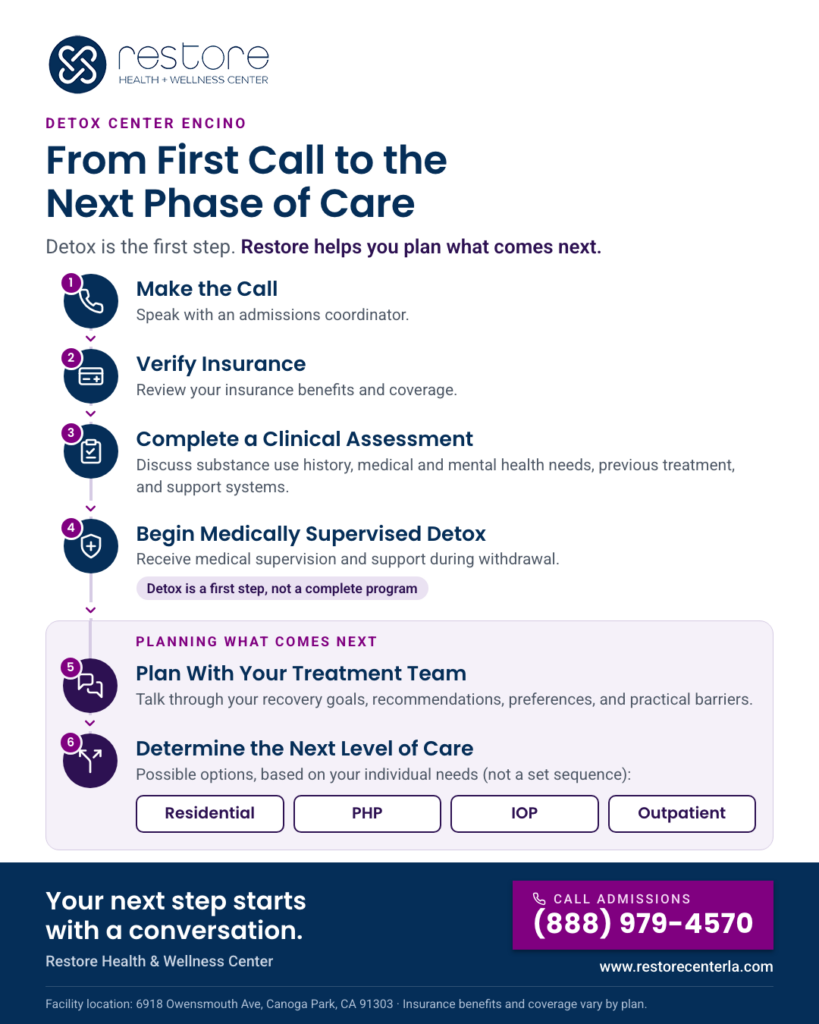
Why Detox Is Just the Starting Point
Detoxification provides medical supervision and support during withdrawal, helping your body adjust as substances leave your system. This phase addresses physical dependence, but substance use disorder also involves psychological, behavioral, and often co-occurring mental health factors.
After detox, the patterns, triggers, and circumstances connected to substance use still need attention. That’s why an Encino addiction treatment center approach emphasizes continuity, using detox as the starting point for care tailored to your needs.
Assessment: Understanding Your Individual Needs
Preparation for post-detox care begins during your initial assessment. At Restore Health & Wellness Center, our clinical team evaluates multiple factors beyond immediate withdrawal needs:
- Substance use history and patterns: What substances were used, for how long, and at what frequency
- Co-occurring mental health conditions: Depression, anxiety, trauma, or other behavioral health concerns
- Medical considerations: Chronic pain, physical health conditions, or medication needs
- Social circumstances: Living environment, family support, employment, and housing stability
- Previous treatment experiences: What has and hasn’t worked in past recovery attempts
This evaluation helps determine which level of care may provide the most appropriate support after detox.
Communication With Your Treatment Team
Active engagement with your care team during detox can make transitions smoother and help you take part in decisions about your care. We encourage you to:
- Ask questions about recommended next steps: Understanding why specific programs are suggested helps you commit to the process
- Share concerns about barriers: Insurance questions, family obligations, or work commitments can often be addressed through care coordination
- Discuss your goals and preferences: Your values and preferences help shape your plan
- Be honest about your substance use history: Complete information supports more accurate treatment planning
Understanding Continuing Care Options
Several levels of care may follow detox, depending on your assessment:
Residential Treatment
Residential treatment provides 24/7 structured support in a therapeutic environment for those who need intensive focus away from outside distractions. Residential care includes individual counseling, group therapy, and specialized services such as our women’s program and LGBT therapy.
Partial Hospitalization Program (PHP)
PHP offers intensive daytime treatment while allowing you to return home in the evenings. It can provide structure while gradually reintegrating you into daily life.
Intensive Outpatient Program (IOP)
IOP provides several treatment sessions each week while you maintain work or family responsibilities.
Outpatient Treatment
Outpatient treatment offers ongoing counseling and support with less frequent sessions, often as a step-down from more intensive care.
Your team recommends a level of care based on your needs, and that recommendation can change as you progress.
Dual Diagnosis Considerations
Some individuals entering a detox center in Encino learn during assessment that they also have a co-occurring mental health condition. Integrated dual diagnosis treatment addresses substance use and mental health together, so neither is treated in isolation.
Preparing Mind, Body, and Spirit
Healing involves more than withdrawal management. During and after detox, supportive services may include:
- Nutritional therapy to support physical recovery
- Meditation practices to build emotional regulation skills
- Physical wellness activities, including yoga and exercise therapy
- Creative expression through art therapy
Frequently Asked Questions
How long does detox typically last?
Duration varies based on the substances used, individual health, and medical complexity. Your treatment team will discuss what to expect based on your situation.
Can I choose my next level of care after detox?
Clinical recommendations are based on assessment, but planning is collaborative. Your preferences, goals, and circumstances are important factors in your continuing care.
What if I don’t feel ready to continue treatment?
These feelings are common. Talking with your counselors about your concerns can help you identify barriers and options you may not have considered.
Can family members be involved in planning next steps?
With your consent, family members can take part. Family therapy and education can help loved ones understand and support your recovery.
Your Path Forward Starts Here
Choosing to begin detox takes courage. Extending that commitment beyond withdrawal management, into therapy, skill-building, and continued support, helps you build on that first step.
At Restore Health & Wellness Center, we support individuals and families through each phase of care, from medically supervised detox through residential treatment, outpatient programs, and alumni support. Contact our admissions team today at (888) 979-4570 to learn how a drug rehab center Encino families can turn to can help you plan your next phase of care.